Morocco’s $1.3 Billion Battery Gigafactory Prepares to Launch Production in Kenitra
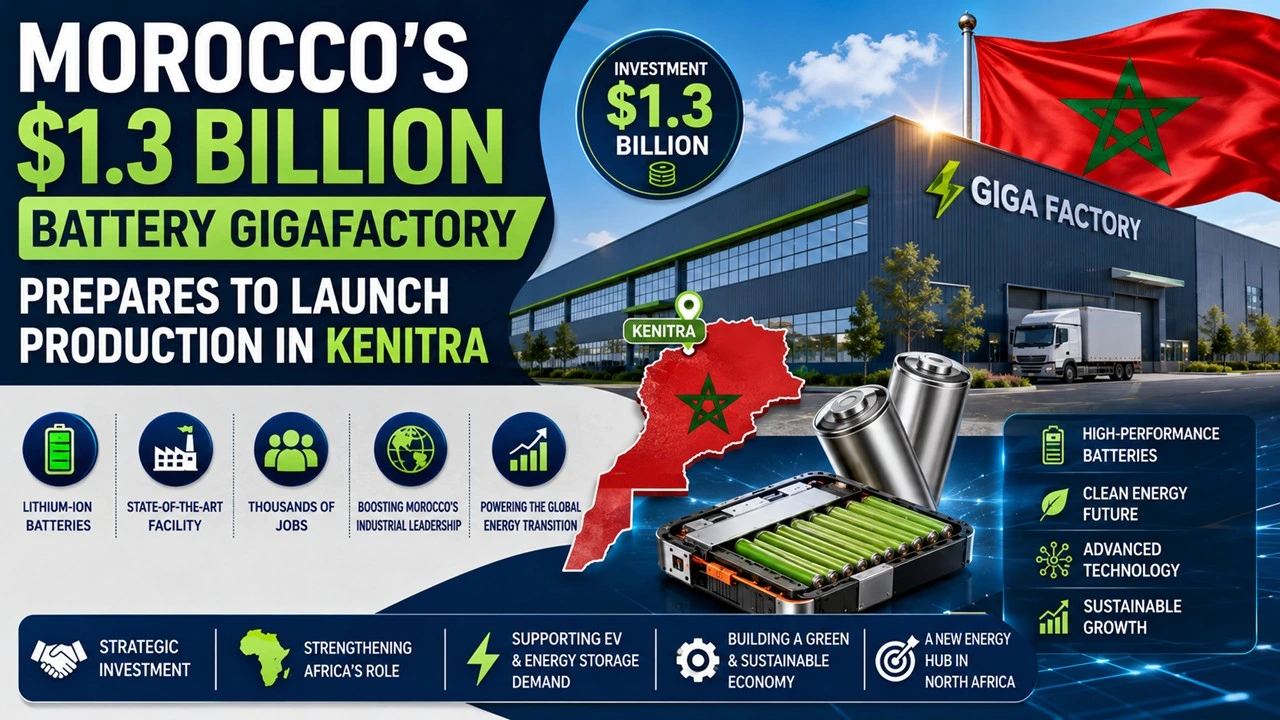
Africa’s first battery gigafactory is nearly ready. Gotion Power Morocco has announced that it will begin commissioning and starting up the production equipment at its Kenitra plant during the week of October 20, 2026. The step comes after years of planning and builds on an investment agreement that Gotion High-Tech, the Chinese battery maker with Volkswagen as a shareholder, signed with the Moroccan government in 2024.
The first phase carries a price tag of $1.3 billion (about 12.8 billion dirhams) and is designed for 20 gigawatt-hours of annual capacity. The longer-term plan is far bigger. Over several phases, capacity is meant to reach 100 GWh, with total investment of roughly $6.5 billion.
Getting the machinery in place was a large logistical effort. Several thousand containers carrying production lines and high-tech equipment were shipped from China, with help from port and customs authorities. Many of the plant’s workers were trained at Gotion sites in China and then worked alongside group experts in Kenitra. At full development, the plant is expected to create more than 2,300 direct jobs, while earlier estimates put direct and indirect employment at about 17,000.
Timelines have shifted slightly. Officials once pointed to the third quarter of 2026 for the first output, and a broker’s note in May suggested August. According to Gotion’s latest update, the first cell production line should start this month, with a second to follow in November. Sales of assembled batteries are expected by the end of the year. Gotion has also cautioned that financing, approvals and market changes could affect construction and returns.
The project is also drawing in other partners. On September 28, Volkswagen’s PowerCo and Gotion announced a joint venture for cathode materials in Kenitra, with Gotion holding 51% and PowerCo 49%. Cathode and anode production were part of the plan from the start, and no start date has been given for that plant.
Most of the output is aimed at Europe. Moroccan officials have said about 85% of production would be exported, and the company has said it has already received orders from European carmakers. Morocco’s appeal rests on its free trade agreements, its port infrastructure, its phosphate reserves and an automotive sector that already hosts Renault and Stellantis plants.
For Morocco, the plant is a test of its ambition to move beyond assembling cars and become a producer of the batteries that power them.