Elsewedy Electric Proposes EV and Hybrid Vehicle Manufacturing Plant in Algeria
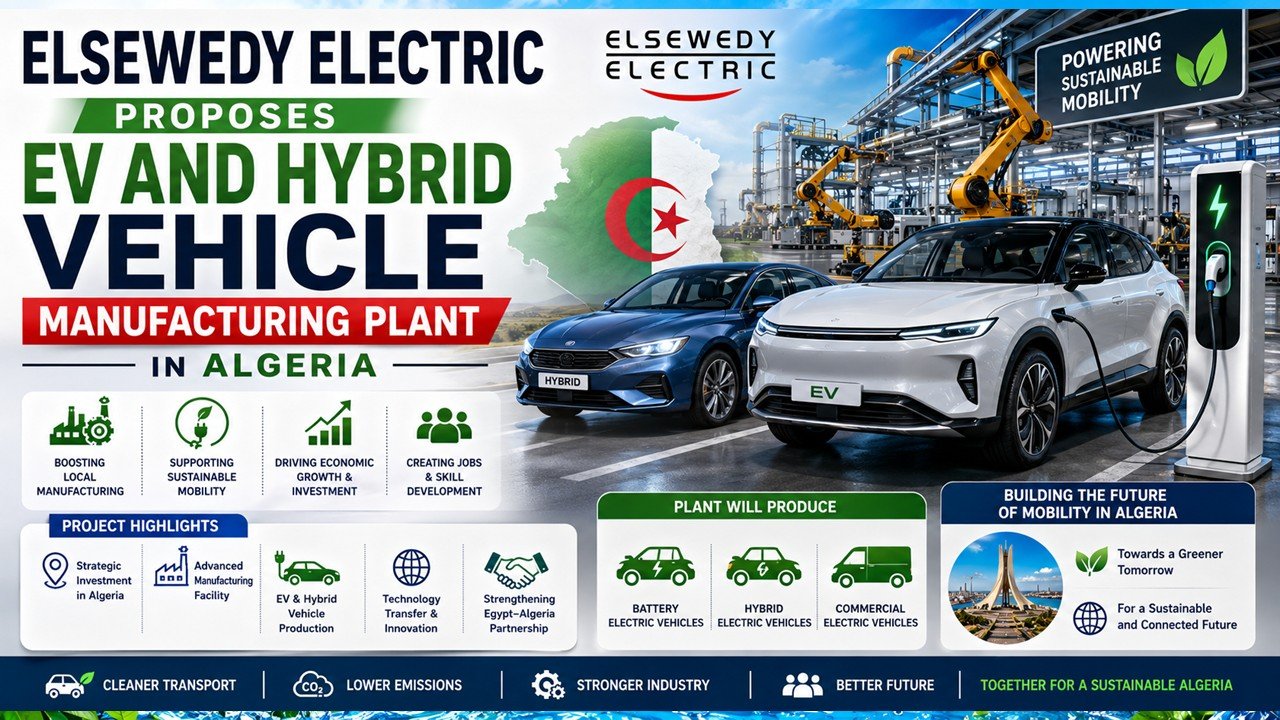
Egyptian industrial group Elsewedy Electric is preparing to move beyond cables and power equipment in Algeria. It wants to build electric and hybrid vehicles there.
Group CEO Mostafa Awad disclosed the plan on the sidelines of the NAPEC 2026 exhibition in Oran. He said a feasibility study has already gone to the Algerian Prime Minister’s office, where it is under review. Local reports say the project would serve both the domestic market and exports.
The cars would carry the Elsewedy EZZ badge, a brand the company already produces in Egypt. Two models are planned: a fully electric car and a hybrid that Awad described as running about 80 percent on electric power and 20 percent on petrol.
Nothing is settled yet. No launch date or factory location has been announced, and the company has not given a separate price tag for the car plant. It is expected to fall under the roughly $1.3 billion investment programme the group unveiled for Algeria in May.
Local content is a major selling point. Elsewedy says it already makes most of the components its vehicles need, with the engine being the exception. By building up a network of local suppliers, it hopes to reach 50 to 60 percent local integration in Algeria.
The timing fits Algeria’s wider ambitions. The country has been trying to build a domestic car industry after years of stop-start rules on vehicle imports and assembly. A foreign manufacturer with an established regional footprint could give that effort fresh momentum.
Elsewedy is not new to the country. It has operated in Algeria for more than a decade, and in 2018 it opened the country’s first cable-accessories production unit in Ain Defla. The company also says it is Algeria’s only local producer of high-voltage cables rated up to 220 kilovolts. In 2025 it signed a memorandum with the national investment agency, AAPI, covering a planned $2.5 billion in investment and ten factories. It has also signed agreements with state energy group Sonelgaz.
Analysts note that execution will be the real test. Large industrial projects in Algeria often run into regulatory approvals, workforce readiness and financing questions.
For now, the EV plant is a proposal rather than a commitment. If approved, it could add a new automotive chapter to Elsewedy’s Algerian story and strengthen industrial ties between Cairo and Algiers.